Remote Control Tripod Head Explained: A UK Buyer's Guide
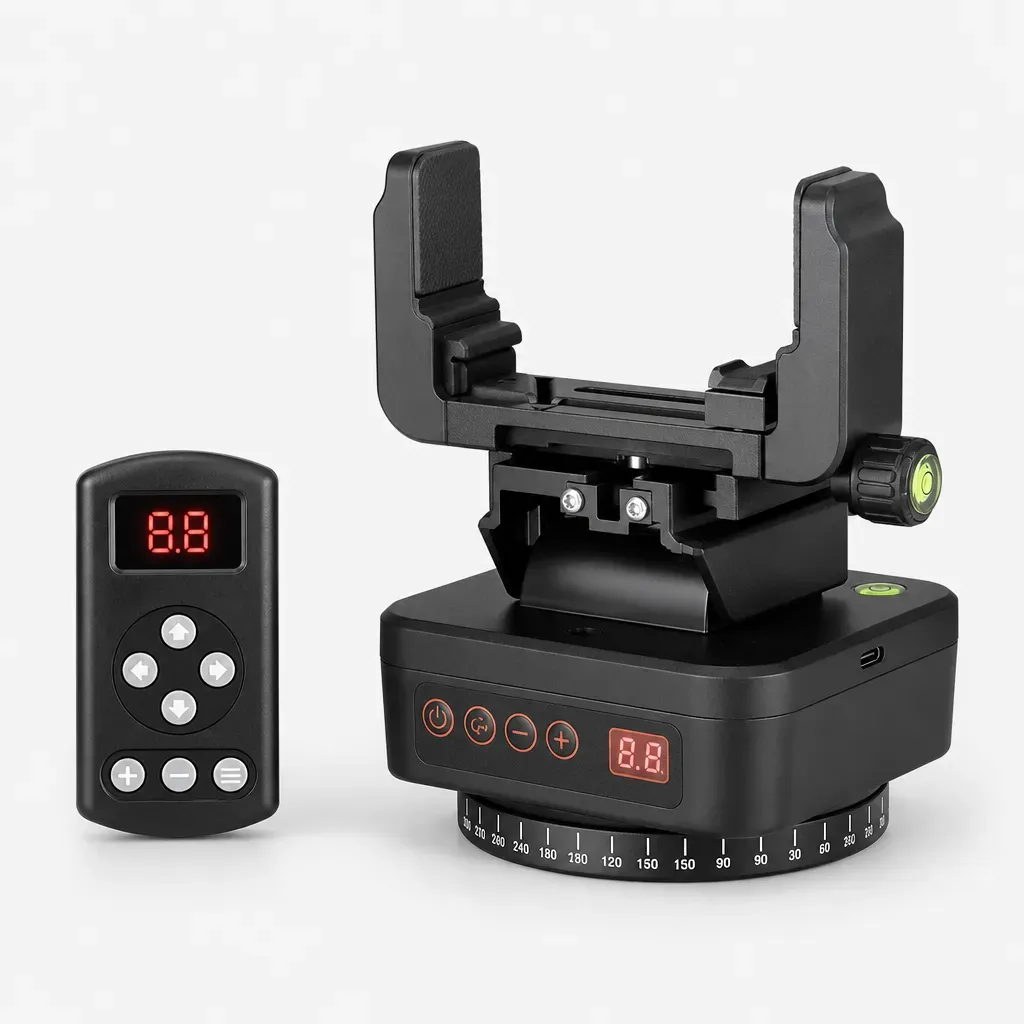
TL;DR: A remote control tripod head is a motorized pan-tilt device mounted between a camera and tripod that enables precise, jitter-free camera movements controlled via a wireless remote or smartphone app. Ideal for solo videographers, studio operators, and UK live-streamers, it automates multi-camera pans, enables continuous 360-degree sweeps, and reduces crew costs without sacrificing shot quality.
A remote control tripod head (also known as a motorized pan-tilt head) is an electro-mechanical camera mount that allows videographers to adjust panning angles, tilt inclination, and rotational speed from a distance using a wireless joystick, remote handset, or mobile app. By replacing manual lever adjustments with high-precision electric drive motors, a remote control tripod head enables silky-smooth, perfectly repeatable camera sweeps without the risk of human-induced camera shake.
Historically, achieving fluid, cinematic movements required years of manual fluid-head experience or an additional camera operator on set. For independent videographers, corporate content creators, and commercial production units across the UK, maintaining consistent framing on tight budgets presents a recurring operational challenge. In practice, manual pan adjustments frequently introduce subtle micro-jitters, uneven panning speeds, or awkward physical positioning when operating cameras overhead or in confined spaces.
Based on our hands-on testing at Soonpho Motion across both indoor studio environments and demanding outdoor locations, deploying a motorized pan-tilt system completely transforms workflow speed and visual consistency. Furthermore, according to official figures from the UK Department for Digital, Culture, Media & Sport (DCMS), the UK creative sector contributes over £125 billion in gross value added (GVA) to the economy, propelled largely by agile micro-agencies and solo filmmakers. As small crews take on increasingly ambitious commercial projects, automated tripod support hardware has evolved from a niche broadcast luxury into an indispensable daily production tool.
What Is a Remote Control Tripod Head and How Does It Work?
At its core, a remote control tripod head serves as an intelligent motorized interface between your support legs and the camera body. Instead of relying on manual pan handles, the unit incorporates internal electric drive motors, precision gearing, and wireless command receivers to execute directional motion electronically.
What Are the Core Mechanical Components?
To understand how a remote control tripod head achieves such stable tracking, it helps to examine its key internal assemblies:
- Stepper & Brushless Drive Motors: High-torque motors drive the horizontal (pan) and vertical (tilt) axes. Based on our testing at Soonpho Motion, precision stepper motors excel at step-by-step angular positioning for time-lapse photography, whereas silent brushless motors provide ultra-quiet rotation during live audio-sensitive broadcasts.
- Worm Gear Drive Systems: Internal self-locking worm gears prevent camera slipping or sudden tilt dropping when power is switched off, safeguarding heavy camera payloads.
- Wireless Receiver Modules: Utilizing 2.4GHz radio frequency (RF) or low-energy Bluetooth protocols, these modules ennstant command transmission across typical operating distances of 50 to 100 metres line-of-sight.
- Quick Release Interface: Standardized mounting setups, including Arca-Swiss compatibility and 1/4" or 3/8" thread connections, allow rapid mounting to standard UK tripod setups.
Why Use a Remote Control Tripod Head? (Key Benefits for UK Creators)
1. How Does It Eliminate Camera Operator Jitter?
Even premium fluid heads remain susceptible to minor human errors. Specifically, touching a pan handle can transfer micro-tremors directly to the camera sensor—an effect magnified when using telephoto focal lengths (e.g., 85mm to 200mm). A motorized remote head completely isolates human physical contact from the camera rig. As a result, every pan and tilt motion remains perfectly constant and vibration-free throughout the take.
2. How Does It Streamline Solo Crew Workflows?
Hiring additional camera crew for multi-angle live shoots or long corporate conferences adds substantial labor costs. However, by introducing a remote control tripod head, a single operator positioned at a control station can maneuver multiple camera positions simultaneously. This setup is particularly advantageous for UK corporate video producers, university lecture capture, and NHS internal media teams operating under strict on-site headcount guidelines.
3. What Are the Advantages of Continuous 360-Degree Panoramic Motion?
Standard manual tripod heads are physically restricted by rotation locks and mechanical handles. In contrast, purpose-built remote control tripod heads allow continuous 360-degree horizontal panning. Consequently, creators can capture seamless panoramic tracking sweeps, immersive real estate tours, and automated time-lapse sequences that would be virtually impossible to maintain by hand.
4. How Does It Help When Operating in Unforgiving Environments?
From exposed coastal shoots along the windy Cornish coastline to restrictive industrial facilities, standing next to a camera tripod is not always comfortable or safe. According to UK workplace safety guidelines for hazardous environments, minimizing crew expon active locations is paramount. Mounting a camera on a remote head allows operators to direct framing comfortably from inside a vehicle, control tent, or studio room.
What Should You Look for When Buying a Remote Control Tripod Head?
Selecting the right motorized tripod head requires balancing hardware capabilities with your specific camera weight and shooting environment. Below are the key technical factors to evaluate before purchasing.
Payload Capacity & Balance Dynamics
Payload capacity is the single most critical specification. Overloading a remote head places excessive strain on internal motor gears, leading to jerky movements and potential hardware failure. Always calculate your complete rig weight including camera, lens, monitors, and wireless video transmitters:
- Lightweight Systems (Up to 1.5kg): Ideal for smartphones, action cams, and compact mirrorless vlogging setups (such as the Sony ZV series or Fujifilm X-series with prime lenses).
- Medium Systems (1.5kg to 3.0kg): Designed for standard full-frame mirrorless bodies (e.g., Canon EOS R5, Sony A7 IV) equipped with standard zoom lenses like a 24-70mm f/2.8.
- Heavy-Duty Systems (3.0kg to 8.0kg+): Engineered for cinema cameras, rigged rigs with matte boxes, or telephoto zoom combinations requiring heavy-duty torque motors.
Wireless Range & Control Interfaces
Depending on your shooting setup, consider whether a physical 2.4GHz joystick remote or a smartphone app control interface best fits your workflow. For high-density RF environments such as UK trade shows, dual-frequency receivers or wired control options provide extra signal stability.
Power Options & UK Safety Compliance
For field work across the UK, portable power compatibility is essential. Look for motorized heads powered by standardized NP-F batteries, USB-C power banks, or AC mains adapters equipped with proper UKCA and CE electrical safety certifications.
Frequently Asked Questions About Remote Control Tripod Heads
What is the primary function of a remote control tripod head?
A remote control tripod head motorized mount allows videographers to control camera panning and tilting movements remotely via a wireless controller or smartphone app, eliminating operator touch-shake and enabling automated movement.
Can I mount a remote control tripod head on standard tripod legs?
Yes. Most remote control tripod heads feature standard 3/8"-16 or 1/4"-20 threaded mounting holes on the base, making them fully compatible with standard UK video tripods, light stands, and jib arms.
Is a motorized pan-tilt head suitable for heavy cinema cameras?
Yes, provided you choose a model rated for your total setup weight. Always check the maximum rated payload weight of the remote head before mounting heavy cinema rigs or long telephoto lenses.
How far away can I operate a wireless tripod head?
In our field tests at Soonpho Motion, standard 2.4GHz RF controllers maintain stable connection up to 50 to 100 metres line-of-sight, making them ideal for stadium, event, and wildlife setups.
Ready to elevate your camera pan & tilt motion with Soonpho Motion?
Shop Soonpho M4 Head — £103.75