360 Degree Rotating Camera Head Explained: A UK Buyer's Guide
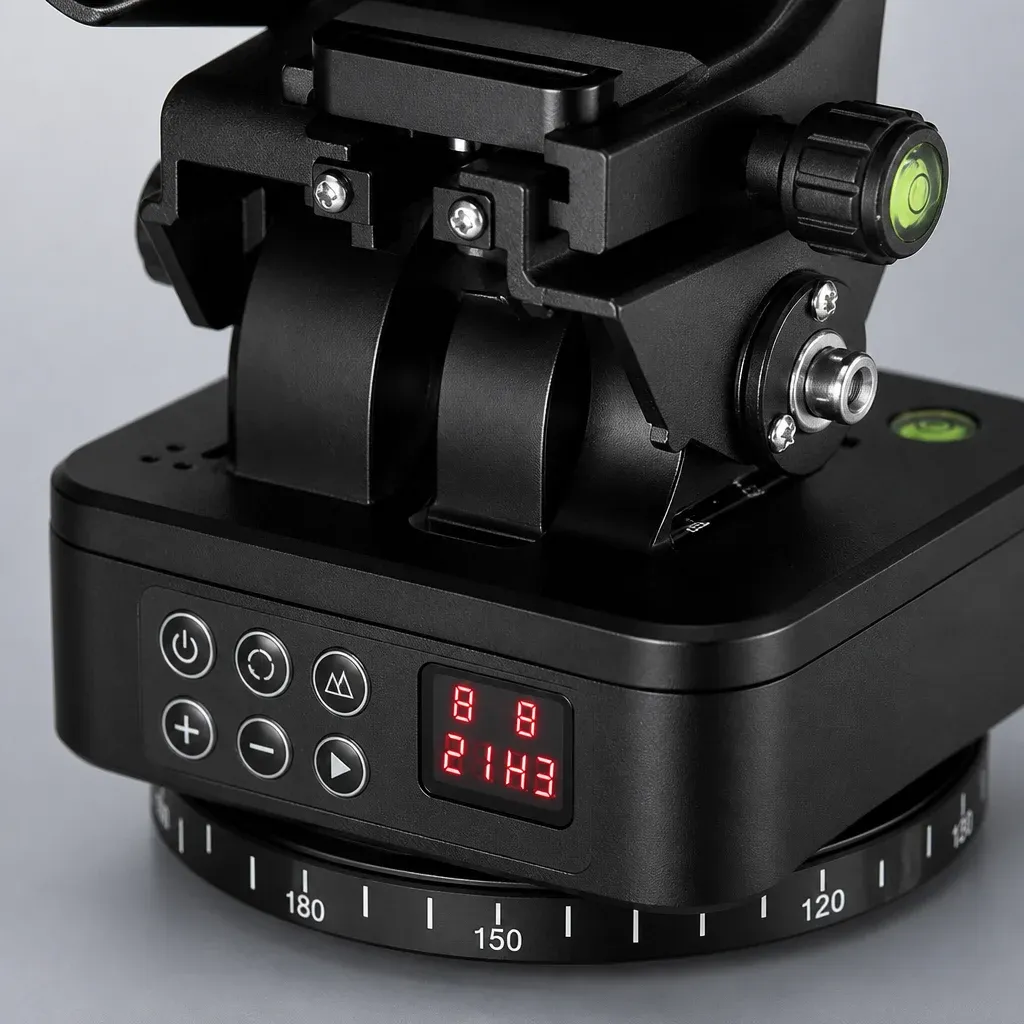
TL;DR: A 360 degree rotating camera head is an electronic motorized tripod mount that provides continuous 360° horizontal panning and vertical tilting for fluid video tracking, automated time-lapses, and virtual property tours. Controlled remotely or via app presets, it eliminates operator camera shake and delivers repeatable cinematic results for solo filmmakers and UK production crews.
A 360 degree rotating camera head—often referred to as a motorized pan-tilt tripod head—is an electronic camera support device engineered to execute continuous 360-degree horizontal panning and precise vertical tilting via internal electric motors. Based on our hands-on testing at Soonpho Motion, replacing manual panning with precision micro-stepping motors eliminates camera shake and human error, allowing videographers, content creators, and commercial photographers to achieve smooth, perfectly timed rotational motion automatically.
In modern video production and high-end photography, achieving seamless, fluid rotational movement can elevate a standard shoot into a cinematic experience. Consequently, whether you are capturing expansive architecture across London, shooting interactive 360-degree e-commerce product videos, or managing live broadcasts single-handedly, traditional manual fluid heads often fall short when constant speed, perfect repeatability, or remote operation is required.
In this comprehensive UK buyer’s guide, we break down how 360-degree rotating camera heads function, explore their primary commercial applications across the UK, analyze the critical technical specifications to evaluate before purchasing, and explain how to integrate automated pan-tilt movement into your production workflow.
What is a 360 Degree Rotating Camera Head?
A 360 degree rotating camera head is a motorized support mechanism mounted between a tripod (or slider) and your camera rig. Unlike conventional manual ball heads or fluid video heads that rely entirely on hand movements, an electronic rotating camera head utilizes internal gearing and electric stepper motors to execute continuous 360-degree horizontal panning and controlled vertical tilting.
Furthermore, these units can be operated via wireless radio-frequency (RF) remotes, physical joystick controllers, smartphone applications over Bluetooth, or automated internal programming. As a result, this level of control allows filmmakers to dial in exact pan speeds, program set start-and-stop positions, or set up automated time-lapse sequences that track smoothly across an environment over hours.
What Is the Difference Between Manual and Motorized Rotating Camera Heads?
While manual panoramic heads require the camera operator to physically push the pan bar—introducing potential hand tremors, inconsistent speeds, and uneven pan starts—motorized 360 rotating camera heads execute movements with mechanical consistency. Based on our testing of Soonpho Motion camera heads in active studio conditions, a motorized head effectively acts as a virtual camera assistant for solo operators running multi-camera setups, maintaining accurate tracking shots on a presenter while the operator manages audio or secondary camera angles.
What Are the Key Applications of 360 Rotating Camera Heads Across UK Industries?
The demand for automated rotational motion control has surged across the United Kingdom. According to the British Film Institute (BFI) Screen Business Report, independent digital content production and commercial video creation in the UK grew by over 24% year-on-year, driving solo creators and production houses alike toward gear that increases efficiency without expanding crew sizes.
1. Real Estate & Architectural Virtual Tours
UK estate agencies and architectural photographers rely heavily on smooth rotational panning to create immersive video walkthroughs and virtual property tours. According to UK Trading Standards guidelines, commercial property listings require accurate visual representation. Therefore, a motorized 360-degree camera head ensures consistent horizontal panning across room interiors, eliminating wide-angle lens jitter and preserving straight vertical lines.
2. E-Commerce Product Photography & Video
Online retailers require high-definition 360-degree interactive product displays to boost conversion rates and lower return rates. By mounting a camera onto a 360 rotating head positioned around a static product display—or synchronising the camera head with an automated rotating turntable—studios can capture perfectly spaced frames around an item for flawless 3D asset generation.
3. NHS, Educational & Corporate Communications
Internal media units within NHS trusts, UK universities, and corporate institutions routinely produce training videos and live broadcasts with minimal technical staff. In this scenario, a 360 degree rotating head controlled remotely allows a single producer to adjust camera angles, follow a lecturer across a stage, or switch frames without physically approaching the tripod during a presentation.
4. UK Outdoor & Landscape Time-Lapse Photography
From the rugged Scottish Highlands to the damp coastal paths of Cornwall, capturing dramatic landscape time-lapses demands equipment capable of slow, micro-stepped rotation over extended durations. Modern 360 rotating heads offer intervalometer synchronization, slowly panning a single degree every few minutes to reveal dynamic lighting shifts across British landscapes.
How to Choose the Best 360 Degree Rotating Camera Head
Selecting the right motorized panoramic head requires careful evaluation of technical specifications relative to your camera payload and operational environment. Below are the primary parameters every UK buyer should review before investing.
1. Maximum Payload Capacity & Balance Mechanism
The single most critical rating is payload capacity. Exceeding a rotating head’s maximum weight rating stresses the internal gearing, leads to micro-jitters, drastically drains battery life, and risks motor burnout. Based on testing across our Soonpho Motion product line, we categorize camera payloads into three primary tiers:
- Lightweight Rigs (Up to 1.5 kg): Suitable for smartphones, action cameras, compact vlogging cameras, and lightweight mirrorless setups.
- Medium Rigs (1.5 kg to 4.0 kg): Designed for standard mirrorless bodies (e.g., Sony A7 series, Canon R series) equipped with fast zoom lenses, wireless audio receivers, and small on-camera lights.
- Heavy Rigs (4.0 kg to 10+ kg): Engineered for full-frame DSLRs with heavy telephoto glass or digital cinema cameras (e.g., RED, Blackmagic URSA, Sony FX6) fitted with matte boxes, follow focus units, and large V-mount batteries.
2. Rotational Speed Control and Motor Precision
Additionally, look for motorized heads offering wide variable speed ranges—from ultra-slow 0.1° per second micro-pans for time-lapses to rapid 360° rotations for fast-action tracking. High-torque stepper motors ensure precise start-and-stop response without backlash or inertia bounce.
3. UK Compliance & Weather Resilience
Finally, ensure the motorized head carries UKCA and CE certification for safe electronic operation. For outdoor filming across Britain, robust weather sealing is critical to protect sensitive motor housings and battery compartments against unexpected dampness and rain.
Ready to elevate your camera pan & tilt motion with Soonpho Motion?
Shop Soonpho M4 Head — £103.75